

The Trade War Continues
There seems to be no end in sight for the U.S.-led tarrif war initiated by Trump. It began with Canada, Mexico, and China, then moved on to now even Europe is under threat. The entire world remains on edge, all because of the unpredictable actions of a single person from the world’s (at least for now) strongest superpower.
Watching the news, I can’t help but wonder—how can a nation’s policies change multiple times in a single day? The back-and-forth decisions feel erratic, but the White House insists this is not “a lack of consistency” but rather “flexibility,” a justification that’s hard to agree with.
Interestingly, this latest tariff policy has served as a “wake-up call” for citizens around the world, prompting them to reflect on their own industries and domestic production.
The Buy Canadian Movement
In Canada, where I live, a movement of unity has emerged—one that was rarely seen before. And it doesn’t seem to be losing momentum. In fact, Canadians are actively seeking more ways to support local products.
When traveling in the U.S., I’ve often noticed how proudly Americans display their national flag at their homes and businesses. Now, I’m seeing a similar trend in Vancouver. Large Canadian flags are being displayed all over the city. The visual impact of a flag is undeniable—it instills a sense of solidarity and pride.

As a food blogger and YouTuber, I’ve also become more conscious of my grocery shopping habits. I now take extra time to check product labels before purchasing. It does add a bit more time to my shopping trips, but I believe it’s worth it. Supporting Canadian products isn’t always easy. Some labels make it difficult to determine the product’s origin, and at times, I’ve wondered—what exactly is the difference between Made in Canada and Product of Canada?
Made in Canada VS. Product of Canada
Through this experience, I’ve taken the time to research the details:
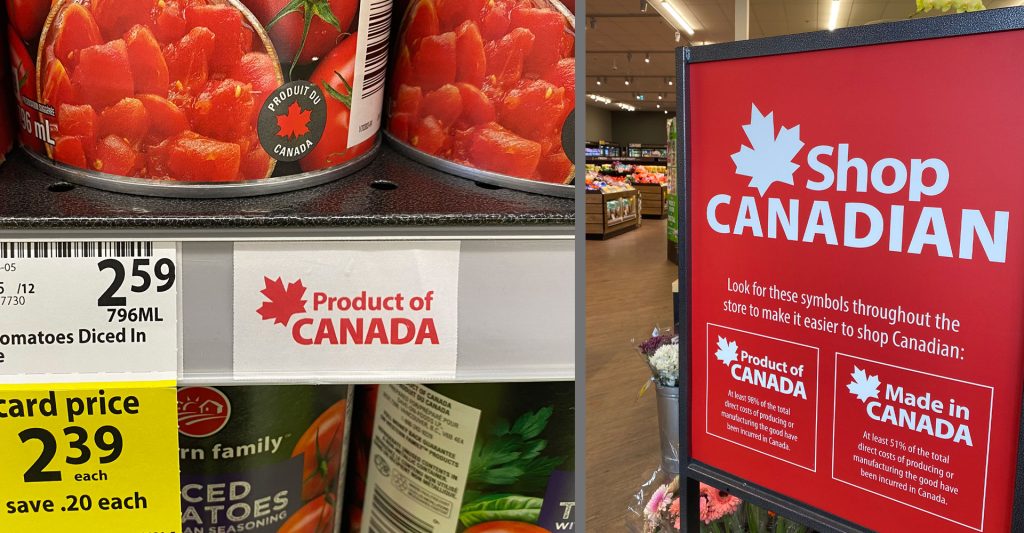
1. Made in Canada
- Indicates that the product was primarily manufactured or processed in Canada.
- However, it does not require that more than 51% of the ingredients be Canadian-sourced.
- The key requirement is that at least 51% of manufacturing costs must be incurred in Canada.
- Typically, this label applies to products made with foreign ingredients that were processed or assembled in Canada.
- Example: Snacks or beverages made in Canada using imported ingredients.
2. Product of Canada
- This designation has much stricter criteria.
- At least 98% of the ingredients must be Canadian-sourced.
- The entire manufacturing and processing must also take place in Canada.
- Commonly applies to Canadian-grown agricultural products, dairy, and meat.
Example: Cheese made with Canadian milk, potato chips made from Canadian-grown potatoes.
In summary:
Made in Canada: At least 51% of the manufacturing costs are Canadian, but foreign ingredients may be used.
Product of Canada: At least 98% of the ingredients must be Canadian, and the entire manufacturing process must occur in Canada.
If you want a product with predominantly Canadian ingredients, look for the Product of Canada label. However, Made in Canada products still contribute to the local economy and workforce, making them a solid second choice.
Shop Canadian Apps
For those like me who struggle to determine whether a product is truly Canadian just by reading the label, there’s good news! Several new apps have been developed to make this process easier. These apps allow users to scan a product’s barcode or take a photo to instantly determine if it’s Canadian. They’ve been gaining popularity through word of mouth, and I’ve already downloaded a few to test them out.
Here are four of the most talked-about apps:
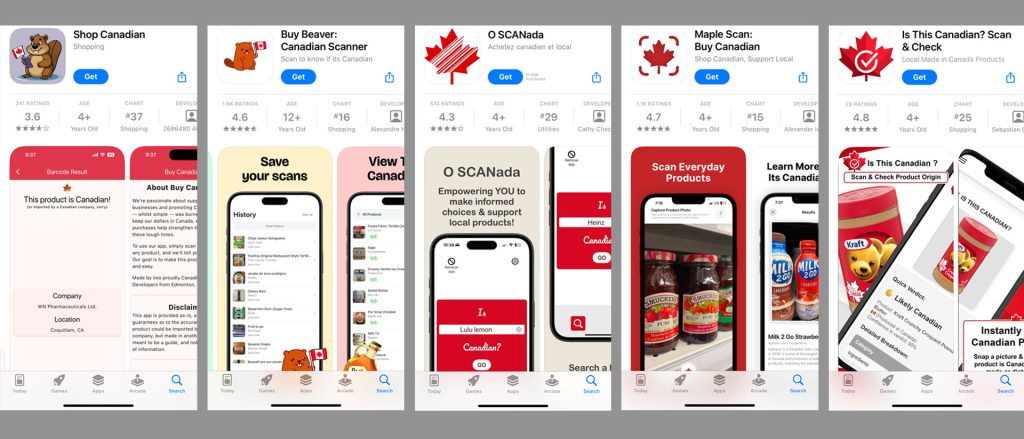
Shop Canadian – Created by two software developers in Edmonton.
Buy Beaver – The brainchild of two entrepreneurs from Montreal.
O SCANada – Developed by a mother and son in Calgary.
Maple Scan – An AI-powered tool built by a researcher in Calgary.
All of these apps allow users to either scan a product’s barcode or take a photo of it, providing information within seconds on how “Canadian” it is through their research system. Another app I discovered is “Is This Canadian? Scan & Check.”
No more straining my eyes to read tiny print—what a great time to be alive!
Will This Movement Last?
No one knows how long this tariff war will continue, but I have a feeling this movement will persist even after the trade conflict ends.
Looking at the comments on related YouTube videos, I see international support:
“I’m Australian, but I fully support Canadians in backing their local businesses.”
“Even without the tariffs, you should buy Canadian products. I love seeing you stand up for this. Much respect from Turkey.”
Even many Americans have left comments expressing their support!
If nothing else, Trump has certainly achieved one thing—he has awakened people worldwide to the importance of supporting their own industries.
Thanks, Trump!